
At different times I have photographed ruby-throated hummingbirds (Archilochus colubris) and hummingbird clearwing (Hemaris thysbe) moths, but on August 9 was the first time I’ve photographed the two types of hummer together.
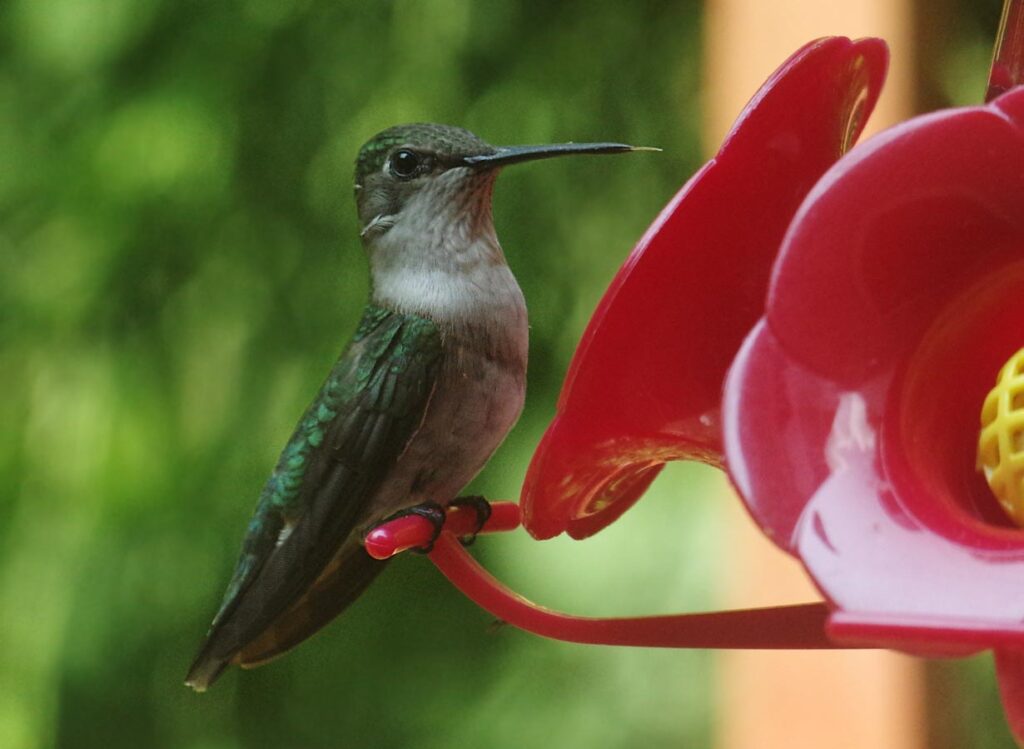
The first to come along was a ruby-throated hummingbird (either a female or an immature male, both lacking ruby throats), who was content to do hummingbird things, such as feeding at a butterfly bush.
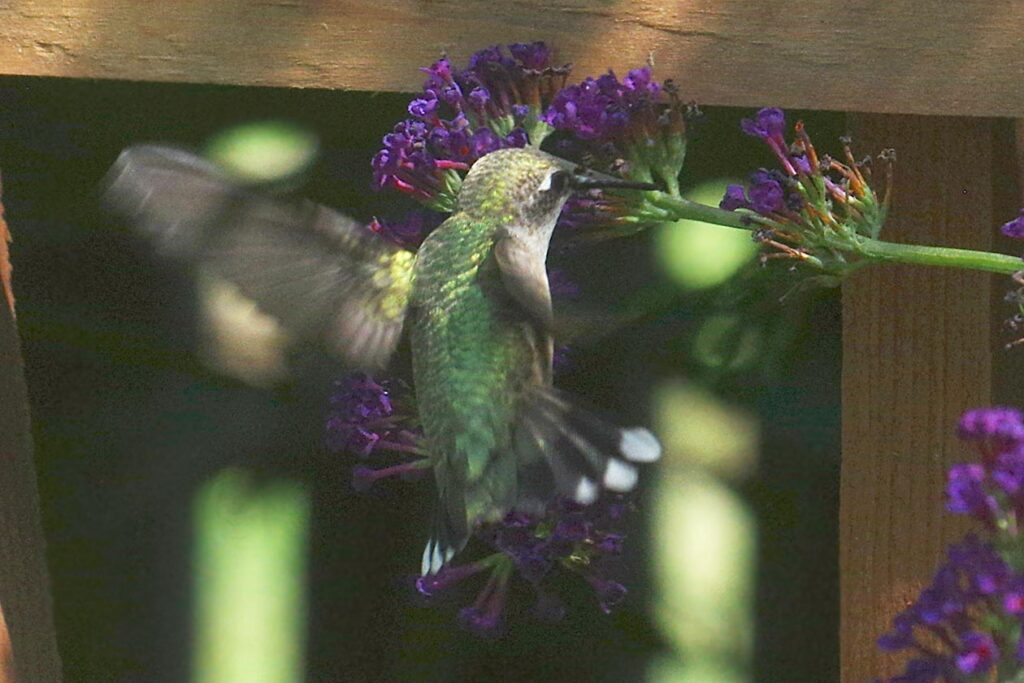
In between sips at the butterfly bush, the hummer also took turns at my hummingbird feeder.
However, to the hummingbird’s shock, a hummingbird moth arrived. The arrival totally ruined the ruby-throated hummingbird’s day.
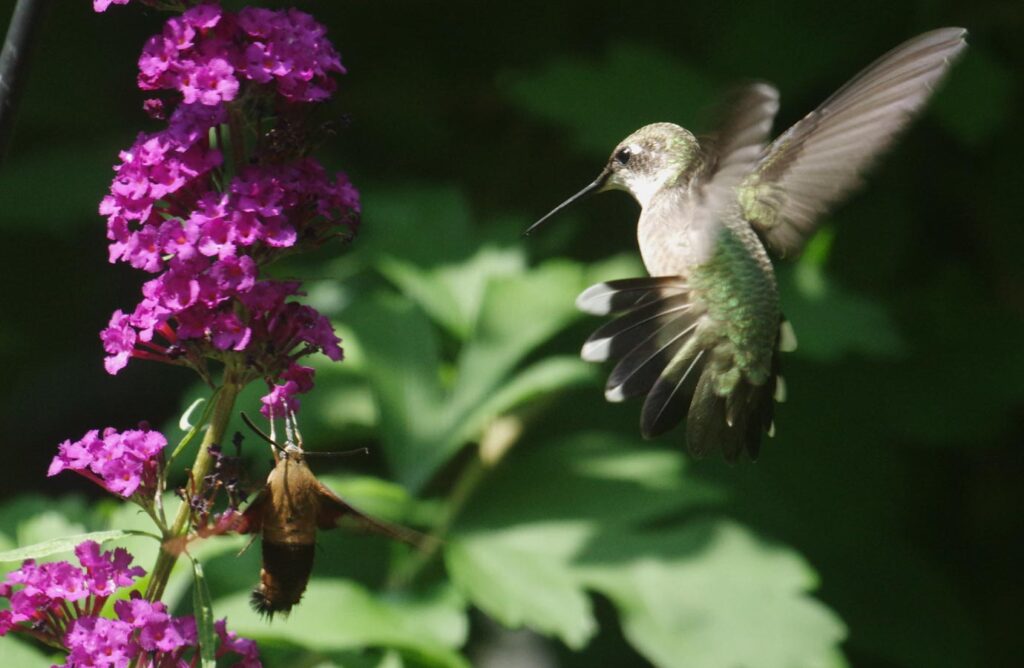
The hummingbird did everything possible, outside of an outright attack, to eliminate competition by driving the moth away.
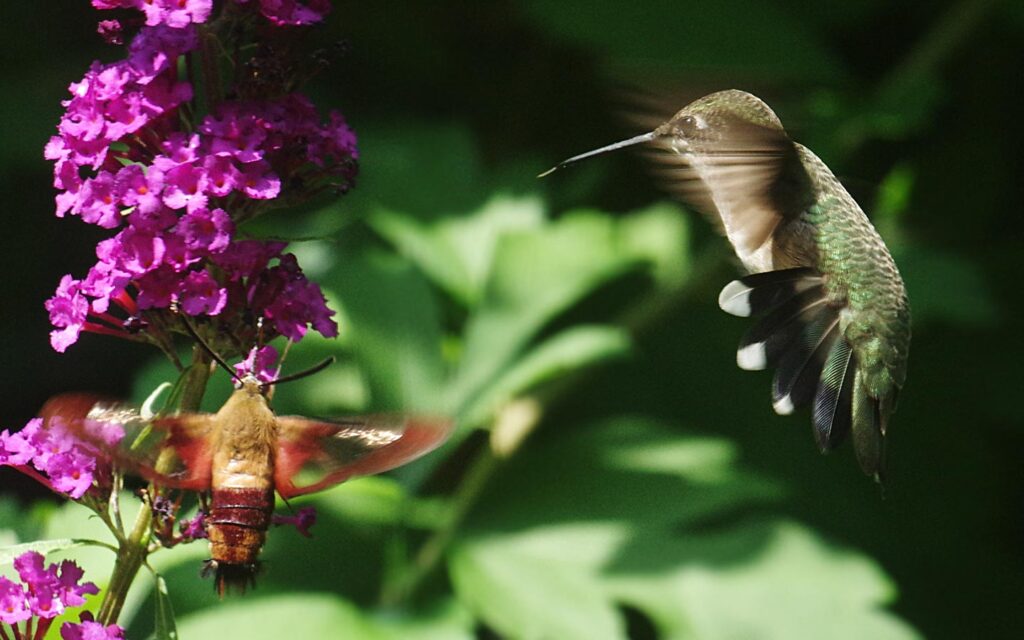
Nothing worked.
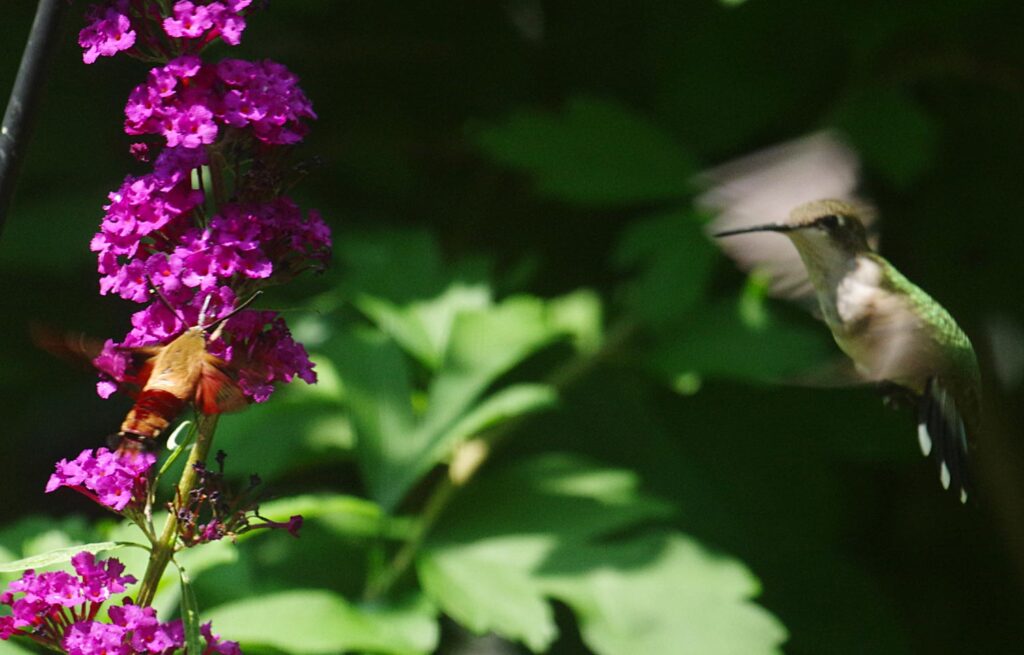
Just when I thought the hummingbird would give up, it reacted more drastically (but without physical violence). I suppose one could say the next photo shows a hummingbird yelling a remarkable curse.
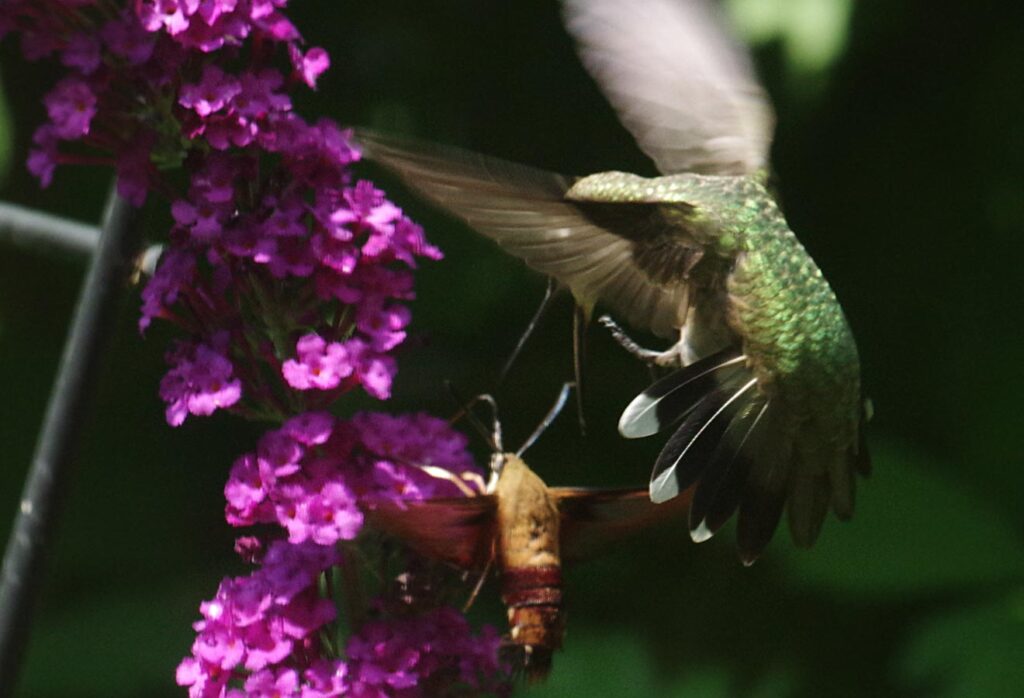
Cursing didn’t drive away the hummingbird moth, but the hummingbird continued its reign of flapping or humming terror.
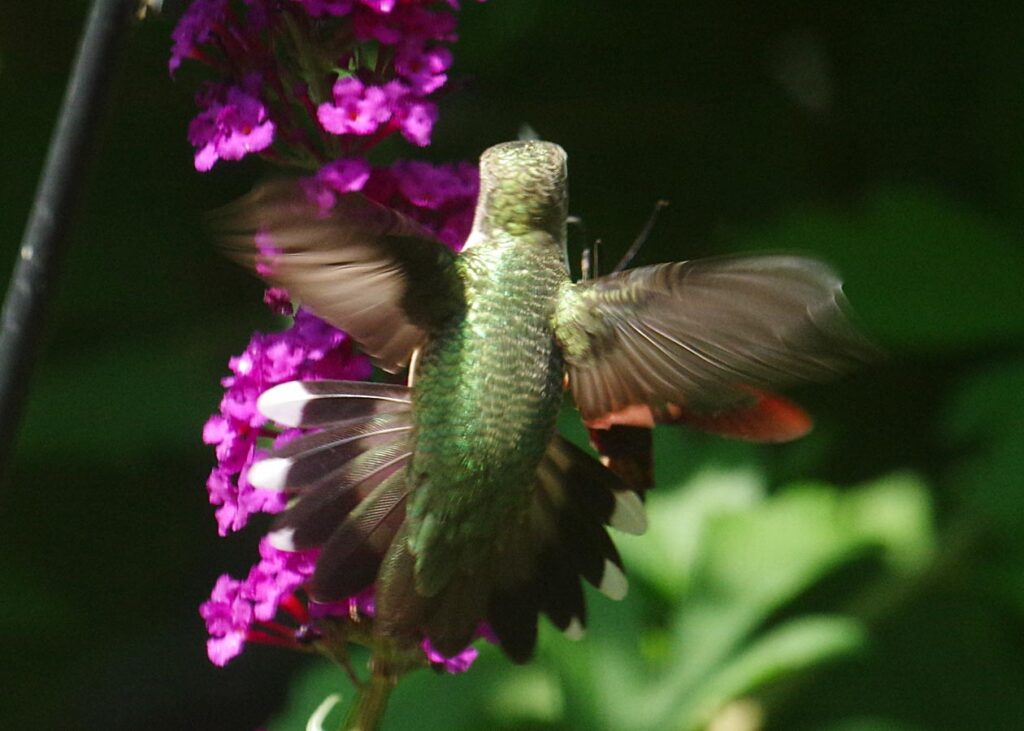
Eventually, the hummingbird left and the hummingbird moth remained, so I switched from a telephoto lens to a macro lens to take a few closeups of the moth. Shortly after I went outside, the hummingbird returned, making an interesting background to the photo below.
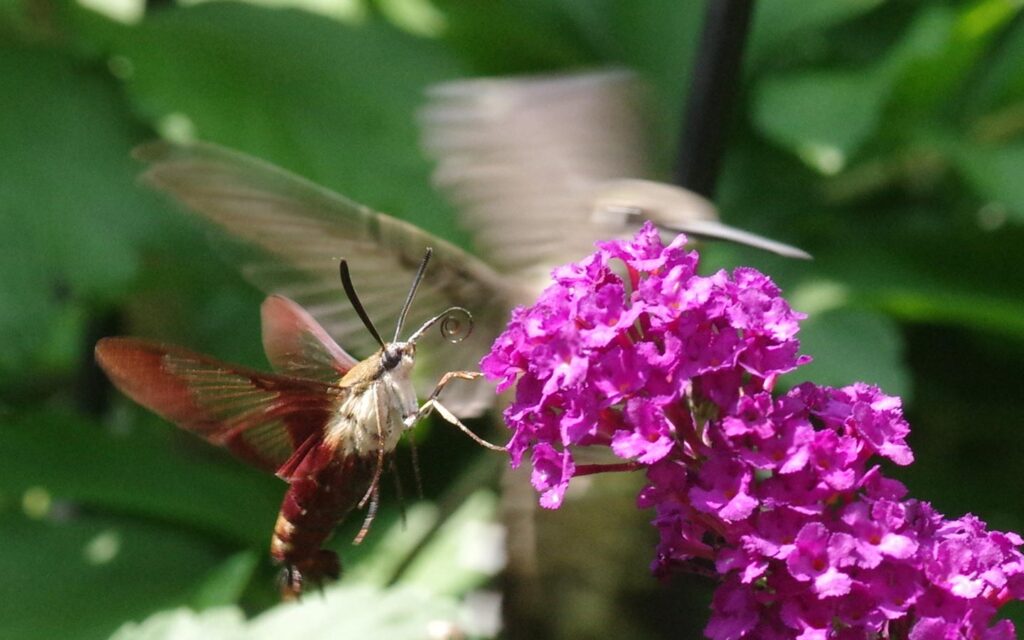
Who would think of a ruby-throated hummingbird as a giant predator?
When hummingbird finally left (and typically a hummer doesn’t hang around if I’m near its feeding area), I photographed the hummingbird moth alone.
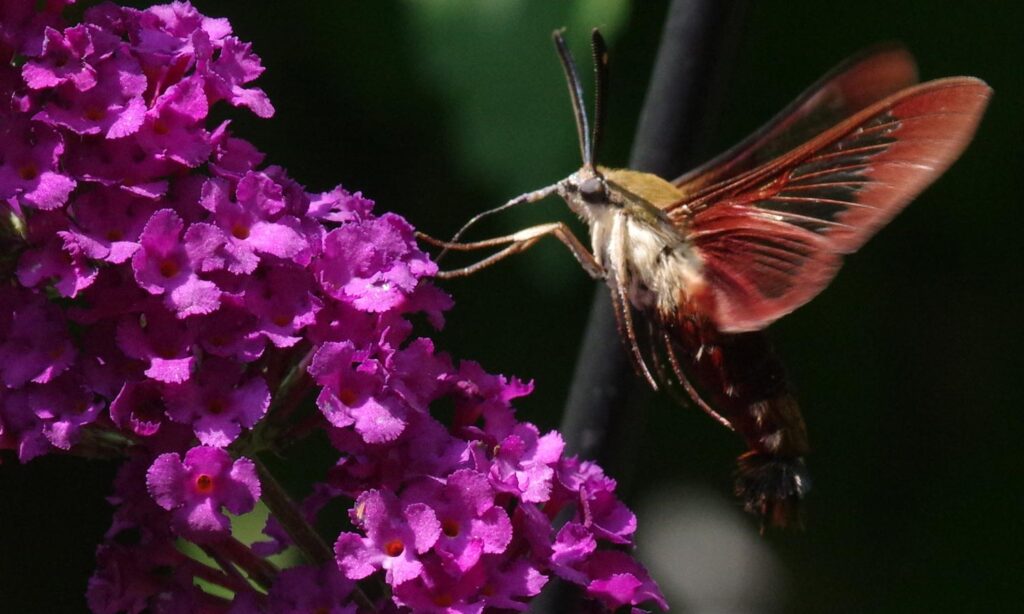
A hummingbird moth has red wings and white legs.
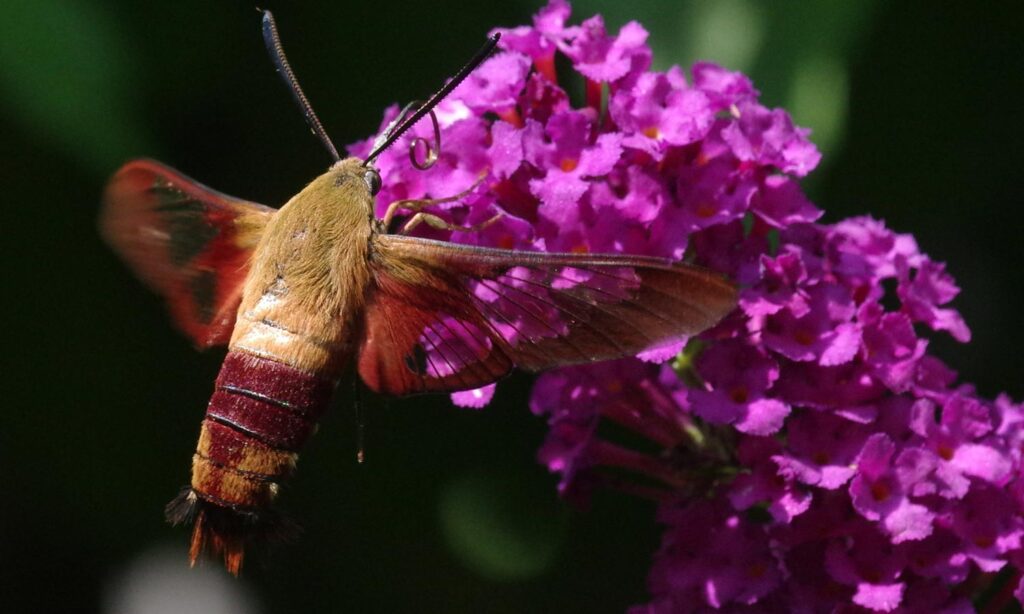
The moth also has a red cummerbund (or a broad red belt), so to say.
All hummers are incredible, whether bird or moth.





A marvelous drama. Hummer vs hummer, you might say. These are the scenes we miss if we walk too fast or we blink too quickly. These are not to be missed. Ever.
Thanks, Caryn, and too true: A scene not to be missed, especially considering that they’re one of the best examples of convergent evolution, in regard to hovering.